The Amazon: One Forest, Three Worlds
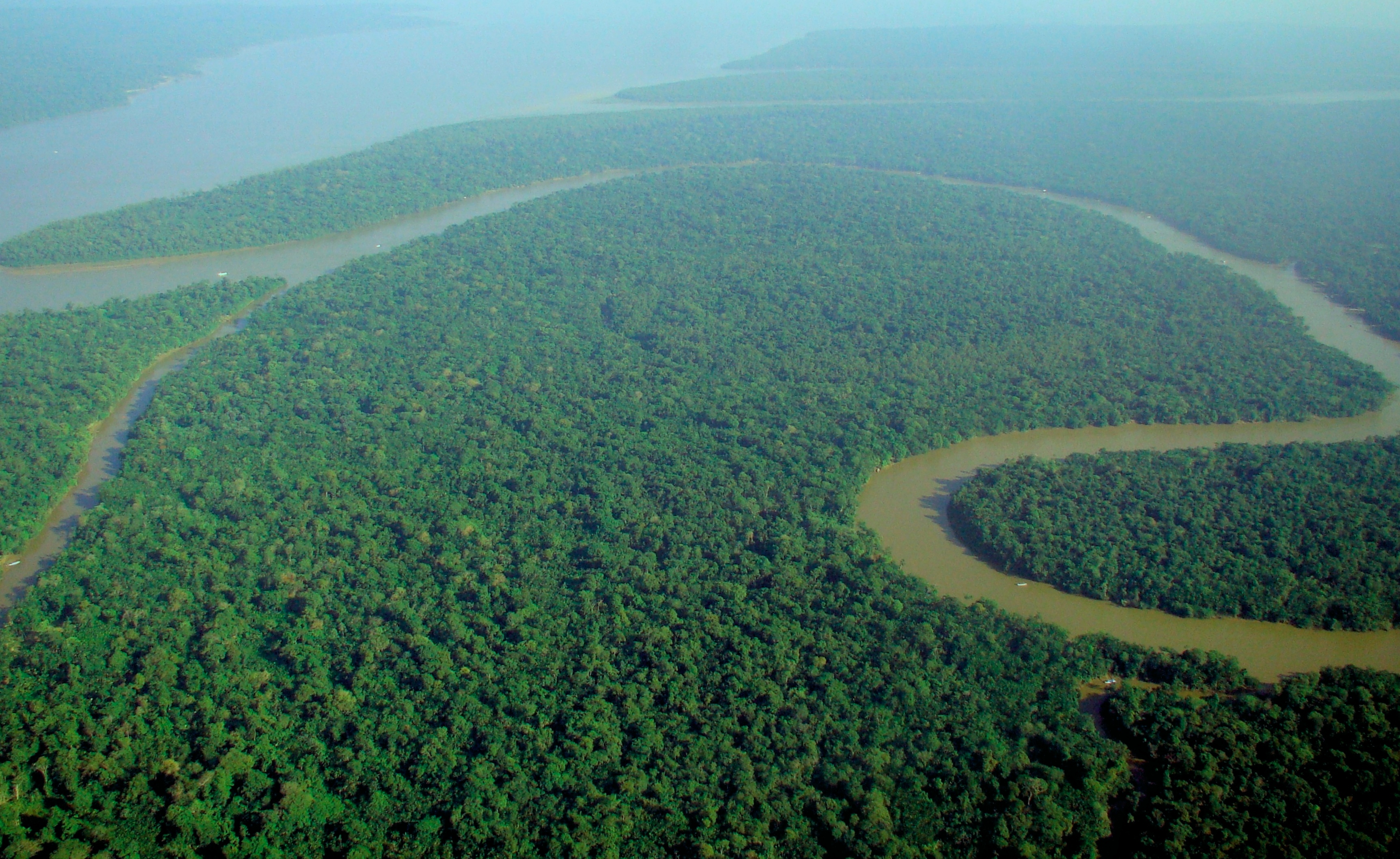
I’ve never set foot in the Amazon, and most likely I never will. But that’s exactly what keeps me up late reading about it: a place I’ve never seen turns out to be wilder than my own imagination.
Picture a single forest with life stacked in three layers — each inhabited by creatures that seem to come from different planets.
The top layer is the canopy, the forest’s roof tens of meters above the ground. That’s where monkeys swing from branch to branch, sloths move in a slowness that feels almost meditative, and flocks of red-and-blue macaws cross the sky screaming. The harpy eagle — a bird of prey with talons the size of a bear’s claws — hunts monkeys and sloths between the branches. This forest sky has its own ecosystem, barely touching whatever happens below.
Descend to the forest floor and the world changes completely. Dim light, humid air, and a different kind of busyness: columns of leafcutter ants, each carrying a green leaf fragment above its head like a parade of tiny umbrellas. The funny part is they don’t eat the leaves. They “plant” them to grow fungus — and the fungus is their actual food. Tiny farmers who were cultivating crops millions of years before humans knew what a rice field was. And through the dark undergrowth, a jaguar passes in silence, an apex predator that even caimans are wary of.
Then there’s the third layer. The one I find most surreal: the river.
In the murky water of the Amazon River lives the arapaima — or pirarucu, “red fish” in the Tupi language. A fish that can grow three meters long, weigh two hundred kilograms, and has one habit that made me re-read the sentence twice: it must rise to the surface to breathe air. Its gills alone aren’t enough. Without air for ten to twenty minutes, it can drown. A fish that can drown — sit with that sentence for a moment.
Its scales are like armor: hard outside, flexible inside, so tough that even a piranha’s bite can’t pierce them. It’s a patient hunter — opening its huge mouth to create a vacuum that sucks prey in, and it can even leap to snatch birds or lizards from low branches.
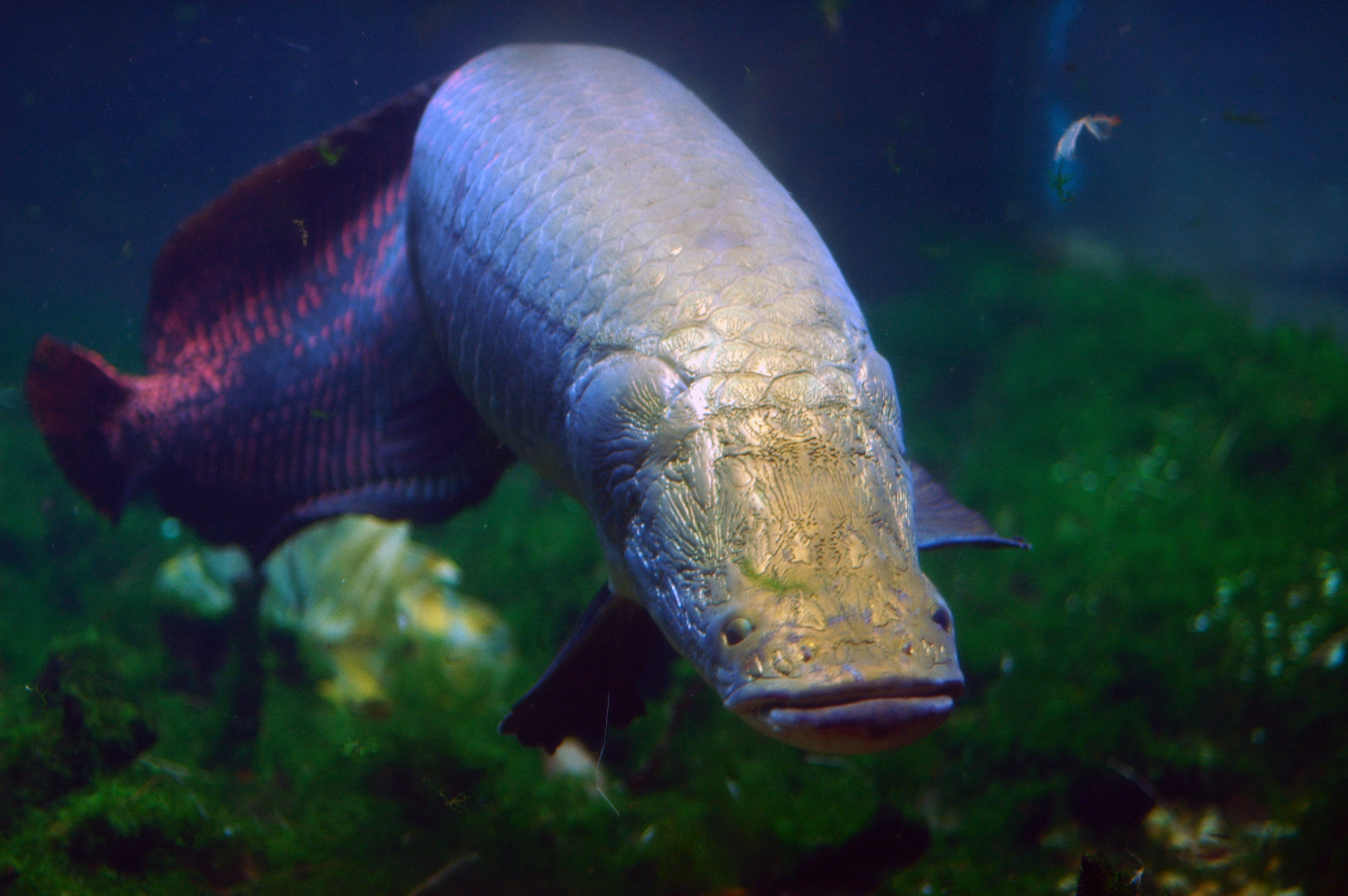 Arapaima gigas — the Amazon River giant that must breathe air. Photo: Wikimedia Commons.
It shares the river with famous names: piranhas, whose reputation is far scarier than their daily behavior, and the pink river dolphin — the boto — gliding calmly through milky-brown water. And then there’s the electric eel, my favorite.
For 250 years, ever since Linnaeus catalogued it, science assumed the electric eel was a single species. In 2019, researchers examined 107 specimens from across Amazonia and found: three distinct species. One of them, Electrophorus voltai, discharges up to 860 volts — the strongest electric shock ever measured in an animal. For comparison, a wall socket in your home delivers 220 volts. And here’s the best part: the world’s first battery, Alessandro Volta’s voltaic pile, was inspired by this animal. The battery inside the phone you’re holding — its great-great-grandfather of an idea was a fish from the Amazon.
And this is what made me grin: an arapaima was once recorded alive in Indonesia — found in the Brantas River, East Java. An Amazonian giant, strayed all the way to our river. Whether it escaped from a farm or was dumped by its owner, imagine a Brantas fisherman pulling up his net to find a three-meter fish that belongs an ocean away.
What I take home from this Amazon rabbit hole isn’t just cool facts for conversation. It’s one realization: in one corner of the Earth, inside a single forest, there are three stacked worlds — and each still holds mysteries. It took 250 years just to learn that the electric eel is three species, not one. We live in an age when everything feels mapped, everything googleable in five seconds. The Amazon reminds us our map is still full of blank spaces.
And maybe that’s good news. There are still things in this world worth being amazed by.
Send it to someone who should read it.
Click once to vote, click again to undo. No login needed.
Write it below. Disagreement is fine — keep it civil.